01
What Signs Suggest a Dryer Vent Restriction?
- Crushed, kinked or restricted venting behind or near the dryer.
- Visible lint behind the dryer or at accessible connection points.
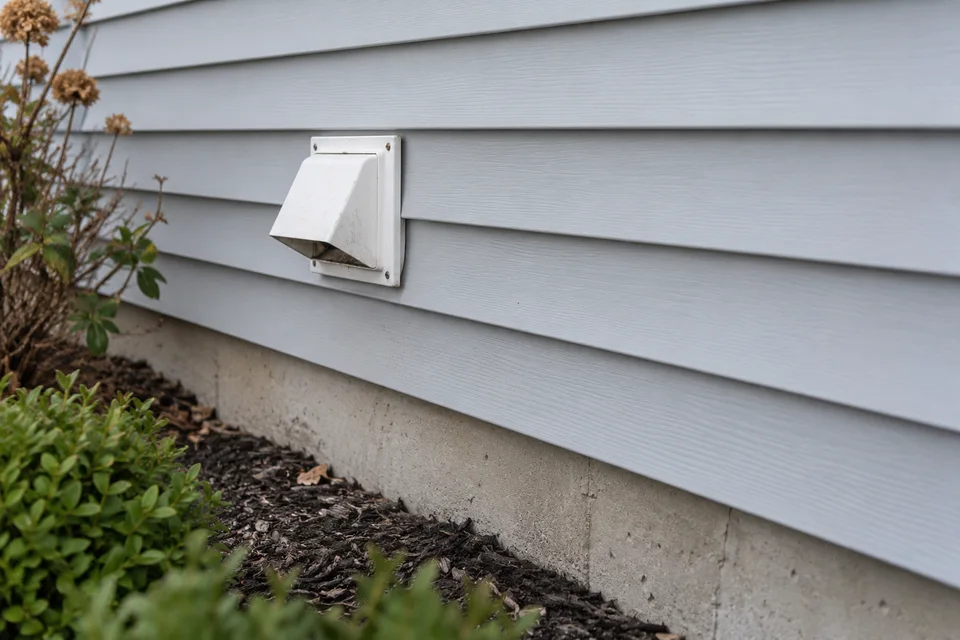
- A damaged, stuck or missing outside hood or termination cover.
- Lint or debris visible where the vent route can be safely observed.
- Slow drying alone is not a diagnosis; it can have several causes.
02
How Does the Exhaust Route Affect Restriction?
Route length, the number of bends, the material used and the termination type can affect airflow and how quickly lint collects.
These factors help guide an assessment, but they do not prove that a vent is blocked. A professional can inspect the accessible route and termination.
03
When Should Professional Assessment Be Requested?
- Request assessment when venting is crushed, damaged, disconnected or inaccessible.
- Request assessment when the outside hood does not open during operation.
- USFA advises professional service for venting concerns rather than relying only on routine homeowner checks.
- Describe what you observed and where the vent route is difficult to reach.
04
What Can You Not Conclude From Drying Time Alone?
Slow drying can come from the dryer itself, the load size, the vent route, the termination or other issues. Drying time alone does not identify the cause.
Cleaning may improve a restricted route, but it is not a universal fix for every dryer performance problem. Assessment is the safer next step.