Swipe across to see both systems →
01
How do air ducts and dryer vents differ?
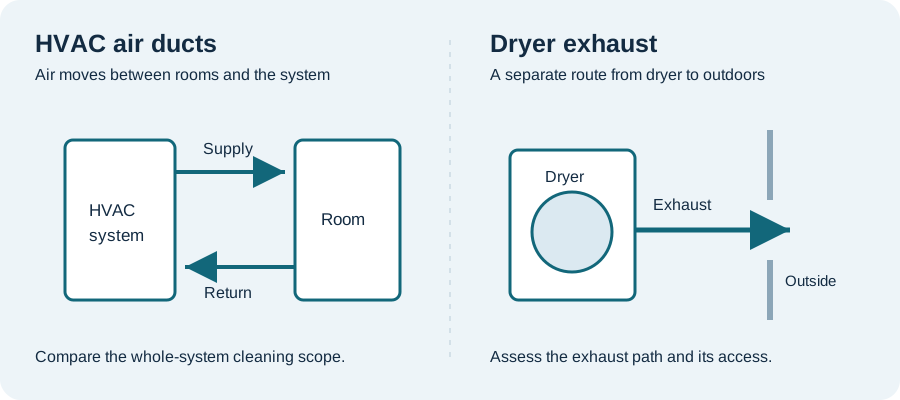
The two systems are separate even when both appear on one estimate.
Swipe across the table to compare all columns →
| System | What it moves | Cleaning focus |
|---|---|---|
| Air ducts | Conditioned air through supply and return paths | Whole-system assessment, containment, agitation and collection |
| Dryer vents | Lint, moisture and heat from the dryer | Appliance connection, route, lint restriction and termination access |
02
What observations point to each system?
- Duct concerns include substantial contamination, pest evidence or excessive deposits inside the air distribution system.
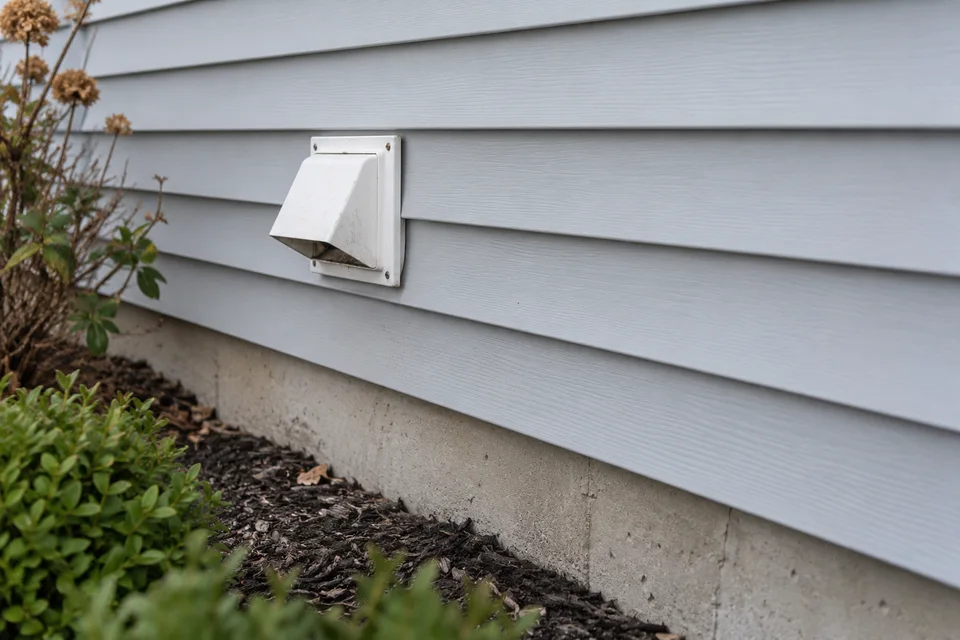
- Dryer concerns include crushed or restricted venting, lint behind the dryer or an outside hood that does not open.
- A dusty grille or one slow dryer load is not enough evidence on its own.
03
Why are cleaning scopes different?
Air duct cleaning uses whole-system assessment, containment, agitation and collection. The goal is to address contamination across the air distribution system, not just visible vent covers.
Dryer exhaust cleaning focuses on the appliance connection, the vent route, lint restriction and termination access. That route and its fire-safety context make it a separate service decision.
HVAC and dryer exhaust can appear as separate line items on one estimate, but each keeps its own scope and access needs.
04
How should you request both if needed?
- List HVAC air ducts and dryer exhaust as separate systems with their own observations.
- Note access constraints, such as basement, crawlspace, attic, closet or roof termination.
- Ask for separate scope lines and written confirmation before assuming one price covers both.
- Coordinate scheduling if both systems are itemized in one visit.