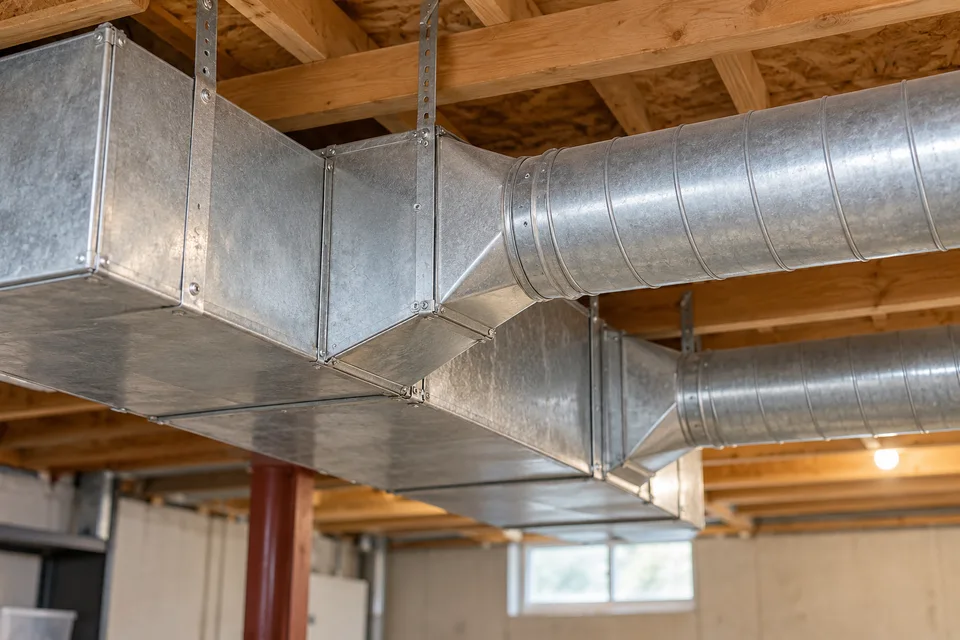
How duct materials affect cleaning
Most homes use one or more duct materials. The material affects how safely agitation and negative-pressure collection can be used, and whether access is straightforward.
- Metal ducts are common and often durable, but joints, seams, and access still affect cleaning.
- Flexible ducts can be harder to clean when they are long, kinked, or deteriorated.
- Fiberglass duct board requires care because the surface can be damaged by rough handling.
- Duct material and condition should be checked before a method is chosen.
What condition limits cleaning
Damaged ducts, wet insulation, deteriorated flex or fiberglass, and suspected asbestos need specialist assessment rather than routine cleaning.
A mold-like appearance is not confirmation of mold. Correct the moisture or pest cause, and have wet or moldy duct insulation assessed for replacement rather than assuming cleaning will restore it.
How method is chosen for different ducts
Method follows assessment. The provider should explain what equipment and access are appropriate for the duct material and condition found.
- Assess duct material, condition, and access.
- Choose agitation and negative-pressure collection where suitable.
- Prefer existing openings where possible.
- Close any service openings properly after work.
- Refer damaged or deteriorated sections to the appropriate repair trade.
When repair or replacement is outside cleaning
Cleaning cannot repair disconnected, crushed, or deteriorated ducts. It also does not replace wet insulation or restore a failing duct system.
If the assessment finds those conditions, the next step is the appropriate repair or replacement trade. Cleaning may still be useful for other accessible parts, but it is not a fix for damage.