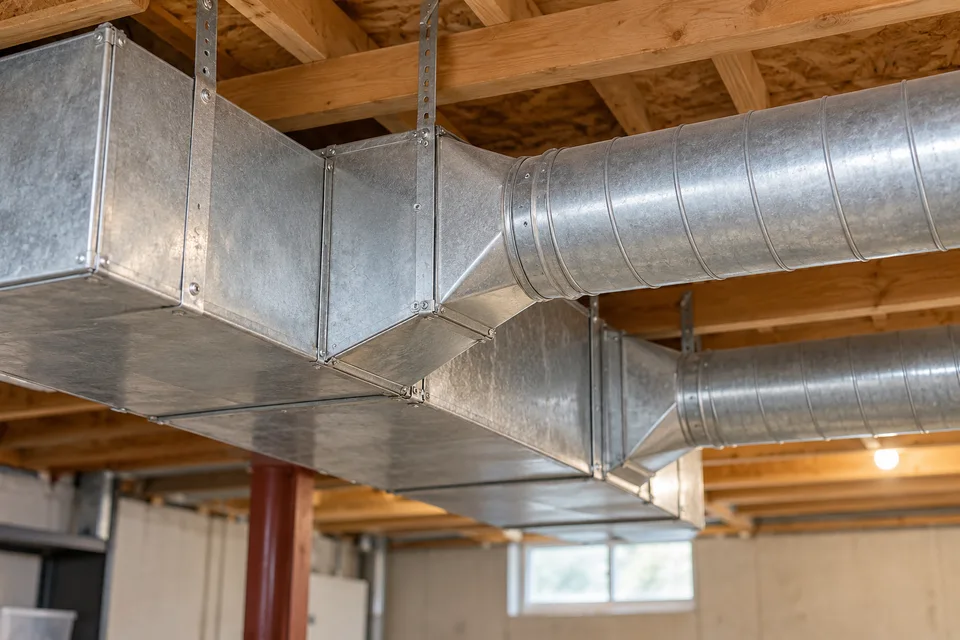
When post-renovation duct cleaning makes sense
A remodel can send drywall dust, sawdust, and other debris into the HVAC system, especially if the system ran during construction. Cleaning is considered when there is evidence that the air-distribution system was affected.
Not every renovation needs duct cleaning. A visible layer of dust near a return or register is a reason to look further, not proof that the whole system is contaminated.
Signs that construction debris may be in the ducts
- Drywall dust or sawdust around return grilles or supply registers.
- Debris visible inside an accessible duct opening.
- The HVAC system ran while sanding, cutting, or demolition was underway.
- A recent renovation used temporary barriers poorly or not at all.
- Dust appears on surfaces soon after the work ends, though this alone does not confirm duct contamination.
How post-renovation cleaning is planned
- Protect floors, furnishings, and air handlers before work begins.
- Use containment where suitable to keep debris from spreading into occupied rooms.
- Agitate debris from duct surfaces and collect it with negative-pressure equipment.
- Clean accessible components and registers that are included in the estimate.
- Close any service openings properly and check that access panels are secure.
- Confirm the method suits the duct material and condition found during the visit.
What cleaning cannot fix after a renovation
Damaged ducts, wet insulation, mold-like growth, and suspected asbestos need the appropriate specialist rather than cleaning alone. HVAC mechanical repair is also outside a duct cleaning estimate.
Cleaning can remove accessible construction debris from the air-distribution system. It does not repair poor workmanship, seal every leak, or replace insulation that was damaged during the renovation.